
RightRobot Learn
LiDAR vs cameras & structured light
The sensor list on a product page can sound like a hierarchy — more sensors must mean a better robot. In practice, each sensing system solves a slightly different problem and the implementation matters at least as much as the label.
The useful versionChoose for the behaviour you need: reliable mapping, small-object avoidance, privacy, or a low body that fits under furniture.
What actually matters
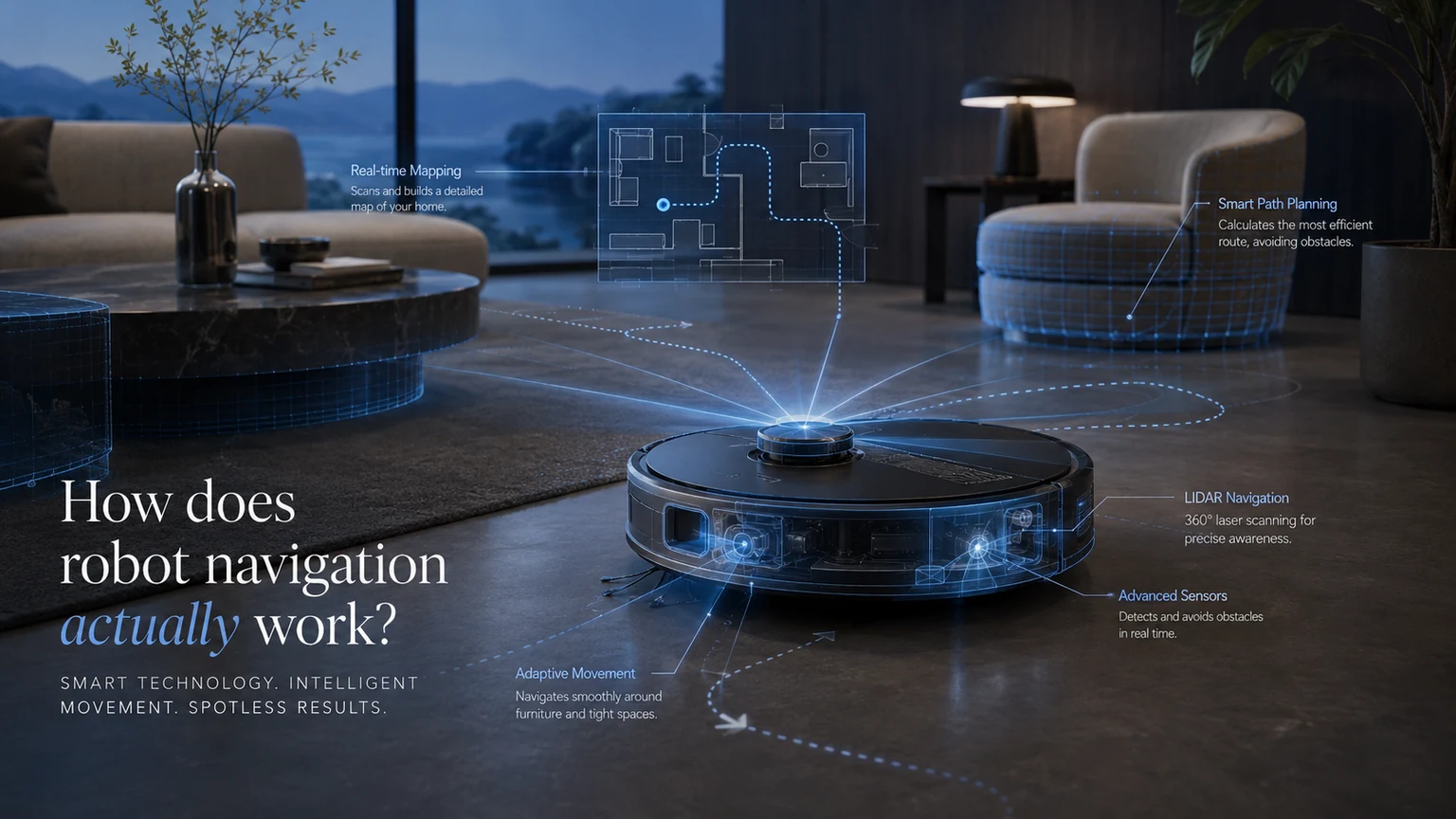
LiDAR is usually excellent for fast, repeatable mapping and works without needing a brightly lit room. A top-mounted LiDAR turret can make a robot taller, though. Cameras and structured-light sensors can help recognise smaller objects such as cables, shoes and pet mess, but real-world avoidance varies a lot between models.
- LiDAR is particularly useful for fast room mapping and repeatable navigation, including in low light.
- Camera or structured-light systems can add object recognition, but they do not guarantee perfect cable, toy or pet-mess avoidance.
- A raised LiDAR turret can increase robot height; low-profile designs may use alternative sensing layouts.
Turn the tech into a decision
RightRobot weighs this alongside the rest of your home.
You do not need to translate every specification yourself. Tell RightRobot what matters in your home and it will use the relevant evidence in context.
Find my robot →