
RightRobot Learn
Obstacle avoidance: what is actually difficult?
A robot can build a beautiful map and still eat a charging cable. Navigation is mainly about knowing where it is and moving efficiently; obstacle avoidance is about noticing the unexpected things left in its path.
The useful versionFor cluttered homes, judge the difficult objects — not whether the robot can steer around a chair.
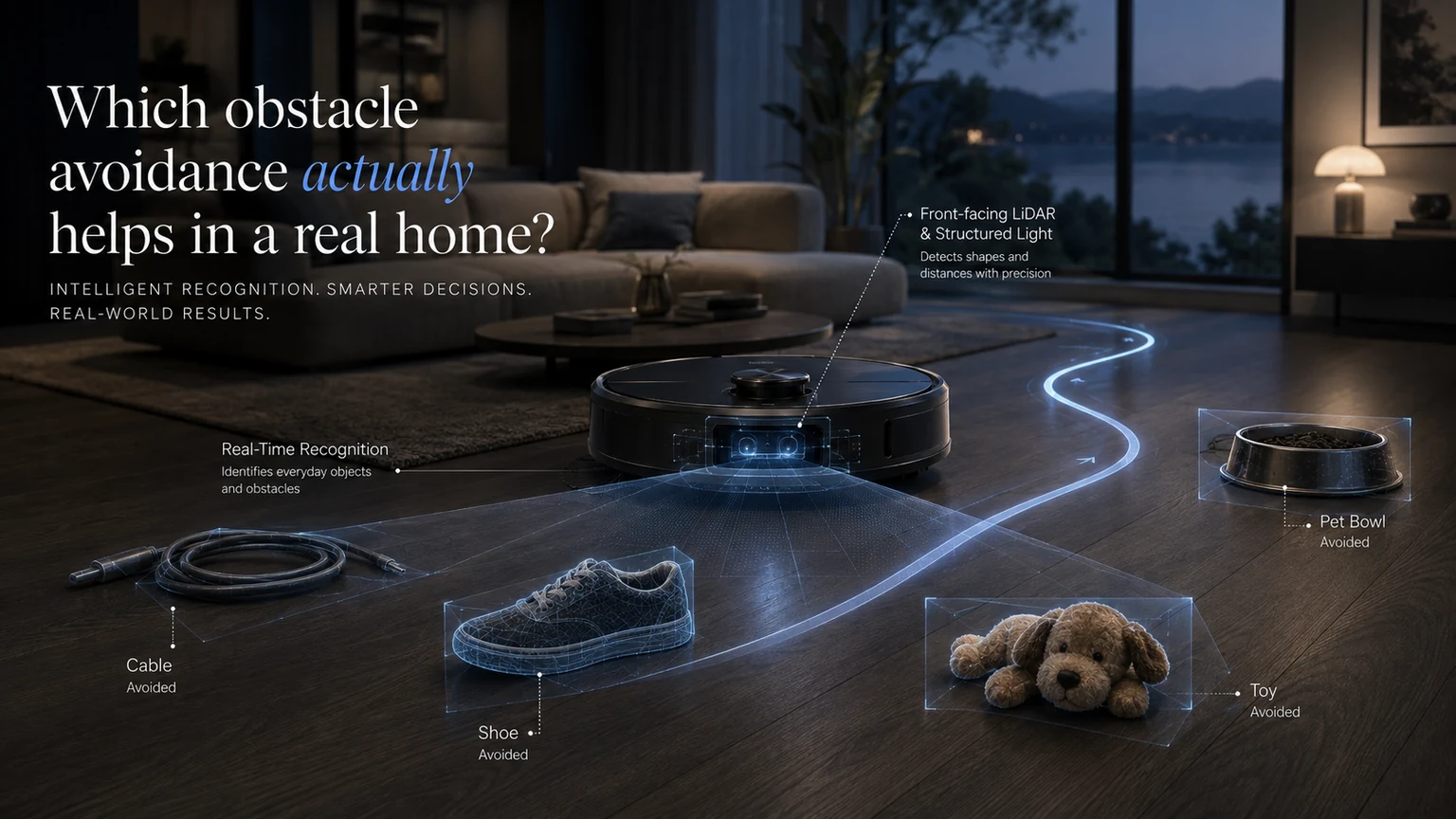
What actually matters
Most modern robots can navigate walls and large furniture. The more useful test is whether they identify small, low or awkward objects before touching them. Loose charging cables, socks, toys and pet waste are much more demanding than simply mapping a room.
- Large furniture is relatively easy for mature navigation systems to handle.
- Thin, dark, reflective or low objects are harder for cameras and depth sensors to identify reliably.
- Object recognition software can improve over time, so exact-model testing is more useful than the sensor badge alone.
Turn the tech into a decision
RightRobot weighs this alongside the rest of your home.
You do not need to translate every specification yourself. Tell RightRobot what matters in your home and it will use the relevant evidence in context.
Find my robot →